
Cart
0
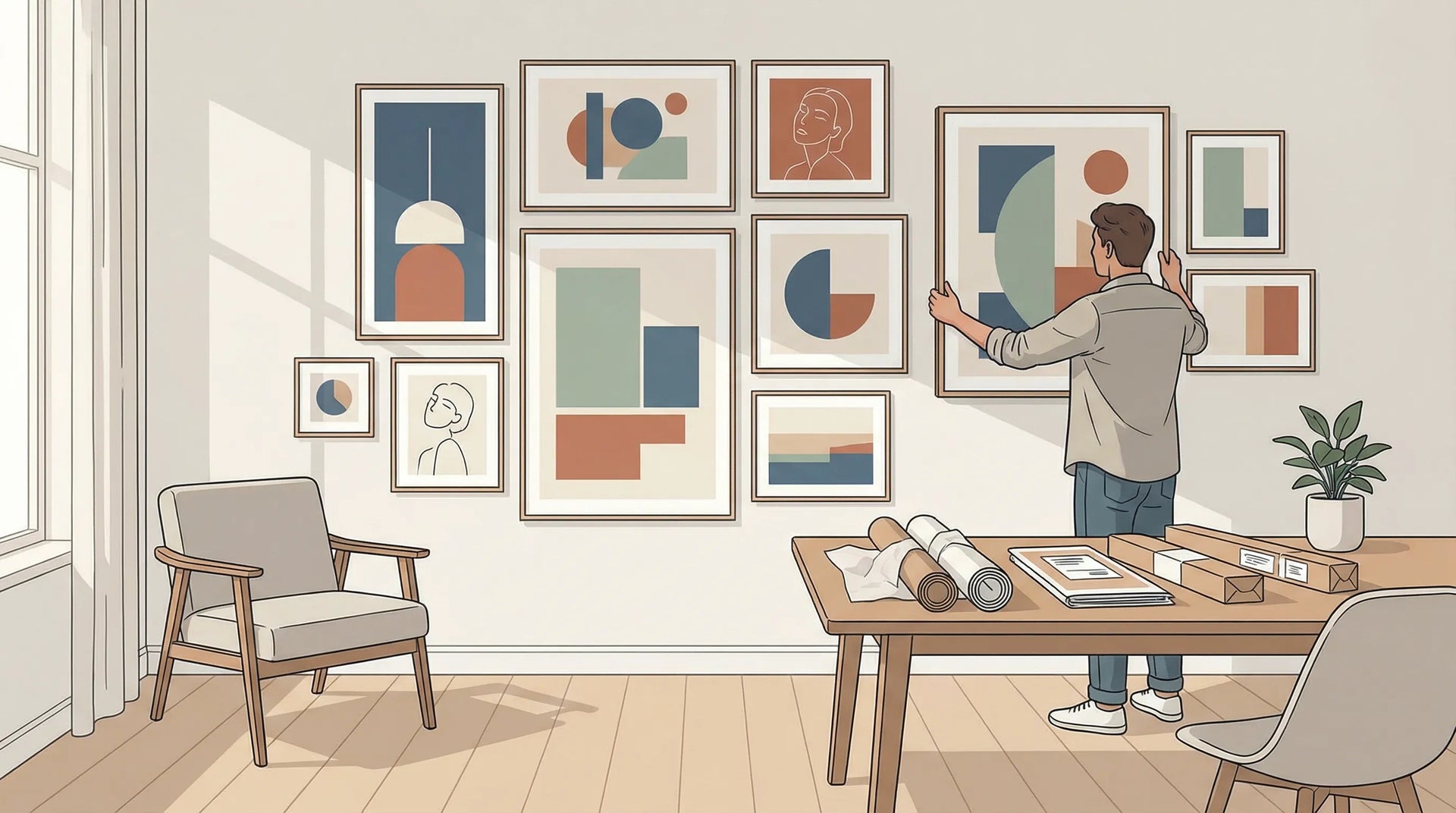
“Print to order posters” have become one of the easiest ways to bring contemporary art into a home without the stress (and cost) of sourcing originals. Instead of buying stock that has sat in a warehouse, you choose an artwork, size, and sometimes a frame, then the poster is produced specifically for your order and shipped to you.
That sounds straightforward, but the details matter. Print method, paper quality, colour management, and how you handle the artwork in its first 48 hours can determine whether your poster looks pristine for years, or develops waves, scuffs, or premature fading.
What “print to order posters” actually means
At a practical level, print to order means the poster is produced after purchase, rather than being printed in bulk and stored. This model is common for art marketplaces and contemporary poster stores because it allows a wide catalogue of designs in multiple sizes with minimal warehousing.
It also changes what “quality” looks like. With a mass-produced poster, quality is about consistency across thousands of copies. With print-to-order, quality is about the production partner’s process, the materials used, and whether finishing (trimming, packing, framing) is done carefully each time.
Here is a simple comparison to keep expectations realistic:
| Option | What you receive | Typical advantages | Typical trade-offs |
|---|---|---|---|
| Print to order poster | A newly produced print made after checkout | Fresh print, more size options, broad catalogue | Lead time, colour can vary slightly between batches, depends on fulfilment quality |
| Mass-produced poster | A pre-printed poster from existing stock | Faster dispatch, consistent across copies | Limited sizes, can show storage wear, narrower catalogue |
| Original or limited-edition fine art print | Often artist-approved editions, sometimes signed/numbered | Collectability, stronger provenance | Higher price, limited availability, more care requirements |
Print to order is not automatically “better” or “worse” than other options. It is a flexible way to buy art, as long as you know what you are optimising for.
The pros of print to order posters
1) Fresh prints and fewer “shelf marks”
Because the poster is printed when you order, you reduce the chances of receiving a piece that has been repeatedly handled, slid in and out of storage sleeves, or exposed to warehouse dust. For many buyers, this is the most tangible benefit: the poster arrives looking new because it is new.
2) More choice in size (and often framing)
Print-to-order production makes it easier for shops to offer multiple sizes per artwork. That helps you fit art to your wall space rather than forcing your wall space to fit standard stock.
If you are ordering framing too, print-to-order workflows often pair well with made-to-size frames because everything is prepared around your selected dimensions.
3) Easier to refresh your space seasonally
Posters are a practical way to change the feel of a room without repainting or replacing furniture. Print to order catalogues tend to be broad (themes, colour palettes, styles), which makes it easier to rotate pieces: warm tones for autumn, lighter palettes for spring, graphic work for a home office refresh.
4) Potentially less waste from unsold inventory
While printing and shipping always have an environmental footprint, print-to-order can reduce one type of waste: overproduction. Instead of printing thousands of posters that may never sell, production is tied to real demand.
(If sustainability is a priority for you, look beyond the headline and consider packaging, shipping distance, and whether paper choices are responsibly sourced. Those factors often matter as much as “made on demand”.)
The cons and trade-offs (and how to avoid disappointment)
Print to order posters are convenient, but there are a few predictable friction points. Most are easy to manage with the right expectations.
Lead times and delivery windows
Because the poster is produced after purchase, dispatch can take longer than stock items. Add international shipping (and customs in some cases) and the delivery window can widen.
What to do: if the poster is a gift or for an event, order earlier than you think you need to.
Colour can vary slightly
Even with calibrated workflows, minor colour variation can happen between print runs, paper batches, and different viewing conditions at home.
What to do: evaluate colour in neutral daylight when possible, and avoid judging colour under very warm bulbs at night. If you plan to buy multiple artworks that must match perfectly, consider ordering them together.
“Poster” does not always mean “archival fine art print”
Some posters are printed with materials designed for everyday décor, others aim for higher archival standards. Both can be valid, but they are different products.
What to do: look for clear information about paper type, whether the paper is acid-free, and what kind of ink or printing process is used. If a store does not describe materials at all, that is a signal to be cautious.
Frame costs can surprise you
A large poster can be affordable, but professional framing (especially with UV-filtering glazing and archival mounts) can cost more than the print.
What to do: decide whether your priority is a quick, budget-friendly display, or long-term preservation. You can always upgrade the frame later.
To make these trade-offs actionable, here is a quick “problem to solution” view:
| Common concern | Why it happens | Best prevention |
|---|---|---|
| Slight waves or curl | Paper has “memory” from rolling, humidity changes in transit | Let it acclimatise, flatten gently before framing, avoid damp rooms |
| Surface scuffs | Handling, friction inside packaging, or contact with hard surfaces | Handle by edges, use clean hands or cotton gloves, keep face-up contact minimal |
| Colour looks different than expected | Screen brightness, warm indoor lighting, paper finish differences | View in daylight, compare under neutral bulbs, accept small variation |
| Fading over time | Light exposure (especially direct sun) | Hang away from direct sunlight, consider UV-filtering glazing |
How to judge quality before you buy
You do not need to be a print expert, but you should know what signals quality and longevity.
Paper: acid-free matters more than “thick”
Paper weight and thickness affect how premium a poster feels, but acid-free paper is a key factor for ageing well. Acidic paper is more likely to yellow and become brittle over time.
If the product page mentions acid-free or archival-quality paper, that is a strong positive. If it mentions nothing about paper, plan to frame it with extra care and keep it out of harsh light.
Finish: matte vs gloss is not just aesthetics
- Matte finishes reduce glare and can look more “gallery-like”, especially under spotlights.
- Gloss finishes can increase perceived contrast and saturation, but show reflections and can reveal fingerprints more easily.
Choose based on where it will hang (bright room vs controlled lighting) and how close people will stand to it.
Printing: consistency and detail
Shoppers often see terms like “giclée”, “fine art”, or “museum-quality”. These can be meaningful, but they are also used loosely in marketing.
A more reliable approach is to look for:
- Clear close-up photos of the print surface (if provided)
- Crisp line detail (important for typography and illustration)
- Smooth gradients without banding (important for photography and abstract work)
For long-term display concerns like fading, the biggest practical variable is light exposure. Even excellent prints will fade faster in direct sunlight.
For general guidance on caring for works on paper and limiting light damage, you can reference conservation advice from institutions such as the American Institute for Conservation and the UK’s Tate conservation guidance.
Care tips: what to do when your poster arrives
The first hour matters more than people think. Most accidental damage happens during unboxing and first handling.

Let it acclimatise
If your poster arrives rolled, do not rush to force it flat. Let it rest (still in its packaging tube or sleeve) in the room where it will be displayed for a few hours. This helps the paper adjust to temperature and humidity.
Unroll on a clean, dry, wide surface
Choose a table or clean floor area large enough that the poster is not bending against edges. Wash and dry your hands first (or use clean cotton gloves). Oils and tiny particles can mark the surface, especially on darker areas.
Flatten gently, not aggressively
If the poster curls, flatten it gradually:
- Place it face up on a clean surface.
- Use clean, smooth weights (books with a clean sheet of paper between the cover and the print) on the corners for several hours.
- Avoid heat tools, steam, or hairdryers, which can introduce uneven moisture and warping.
If you plan to frame the poster, framing usually finishes the flattening process naturally, as long as the frame is properly sized.
How to frame print to order posters for longevity
Framing is both protection and presentation. If you want the poster to look sharp for years, prioritise conservation basics.
Use an acid-free mount or backing
An acid-free mount (mat) and backing board help prevent acid migration that can cause yellowing or “burn” marks over time.
Consider UV-filtering glazing
Light is the main enemy of colour stability. UV-filtering acrylic or glass can reduce UV exposure. It is not a magic shield, but it helps, especially in bright rooms.
Wilhelm Imaging Research is a widely referenced resource on print permanence and light fading behaviour of inks and papers (see Wilhelm Imaging Research for background reading).
Do not let the print touch the glazing
If the poster is pressed directly against glass or acrylic, moisture can create sticking or blotching. A mount (or spacers) creates a small air gap that reduces risk.
Choose the hanging location like a conservator would
Try to avoid:
- Direct sunlight (even a few hours per day adds up)
- Radiators and heat sources
- Damp walls (often external walls in older buildings)
- Kitchens and bathrooms (humidity swings, airborne oils)

Everyday care: keep it clean without damaging it
Once framed, posters are low maintenance, but a few habits prevent gradual wear.
- Dust the frame regularly with a dry microfibre cloth.
- Never spray cleaner directly onto the glazing. Spray onto the cloth first, and avoid ammonia-based cleaners if you have acrylic glazing.
- Keep candles, diffusers, and cooking aerosols away from unframed prints. Fine particles can settle and bond over time.
- If you store spare posters, keep them flat in a portfolio or archival box when possible, in a cool, dry place.
When something goes wrong: early warning signs
Spotting problems early can save a print.
Rippling or “buckling”
Often caused by humidity. If you see ripples developing inside a frame, move the artwork to a drier room and check that the backing is secure.
Yellowing around the edges
This can indicate acidic materials in the backing or mount, or exposure to pollutants and light. Reframing with archival materials can slow further change.
Musty smell or spotting
That can be mould. Do not wipe it, as you can drive it into the fibres. Isolate the piece and consider professional advice, particularly if the spotting spreads.
A practical buying mindset for print to order posters
Print to order posters are ideal if you want variety, easy customisation, and a clean, modern way to decorate with art. They are less ideal if your main goal is collectability, strict editioning, or a specific historical printing process.
If you approach your purchase like a small design project, choose the right size for the wall, plan a frame strategy, and hang it away from harsh light, you will get the best of what the model offers: fresh, made-for-you art that elevates a room quickly.


